

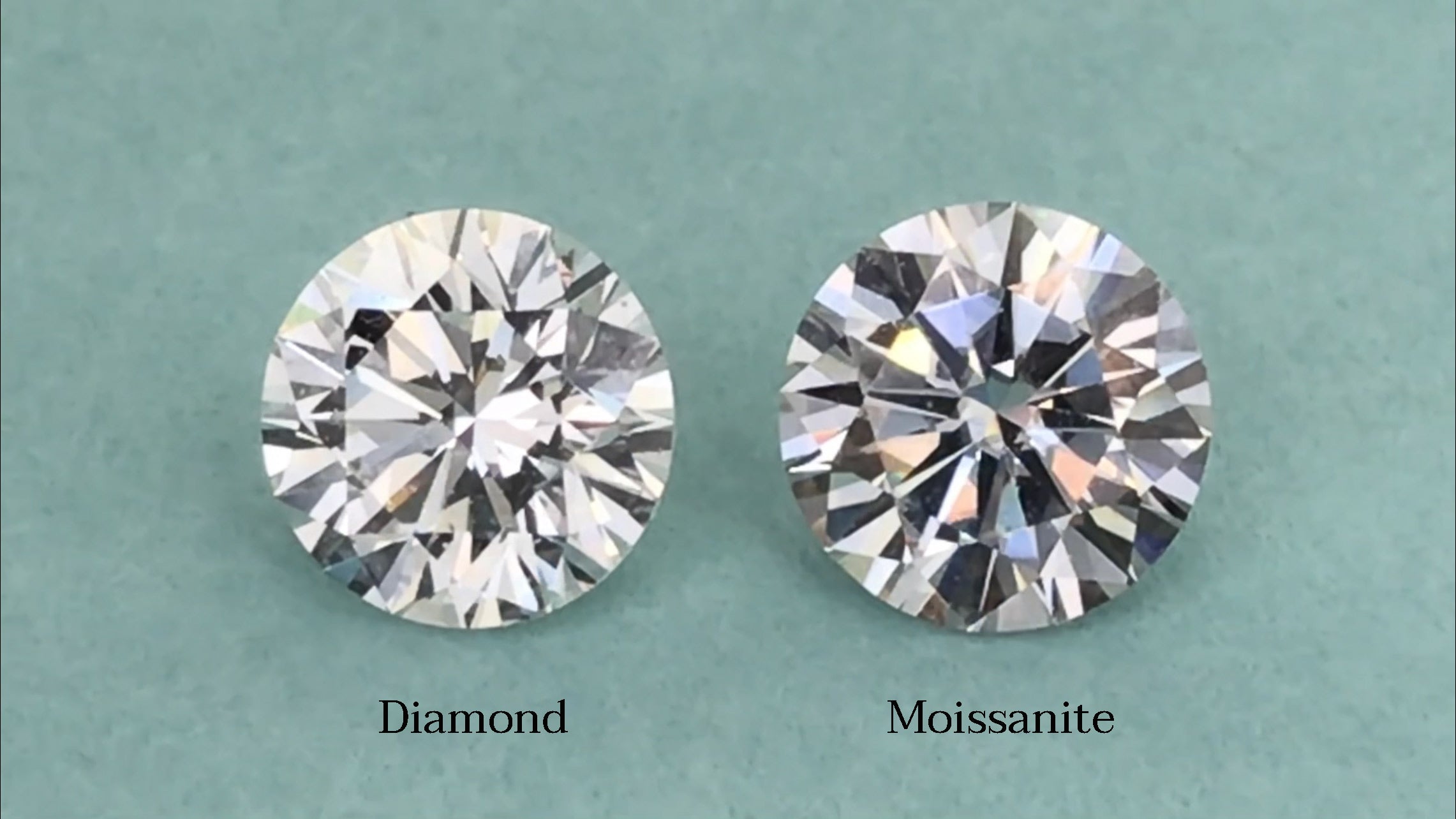
When it comes to choosing the perfect gemstone for an engagement ring or fine jewelry, diamonds, moissanite, and lab-grown diamonds are often at the forefront of consumers’ minds. Each of these stones offers unique qualities that can appeal to different preferences, budgets, and ethical considerations. In this article, we will compare moissanite vs diamond, and lab-grown diamonds, discussing their differences in terms of appearance, durability, cost, and environmental impact.
Table of Contents
What is Moissanite?
Moissanite is a gemstone made of silicon carbide. It was first discovered in 1893 by French chemist Henri Moissan in a meteor crater, which is why it was originally believed to be of extraterrestrial origin. However, most of the moissanite on the market today is lab-created, as naturally occurring moissanite is extremely rare. Moissanite is renowned for its brilliant sparkle and fire, which comes from its high refractive index—higher than that of diamonds.
While moissanite is often used as an alternative to diamonds, it is important to note that it is a distinct material with unique properties. It is not a diamond, and its composition and characteristics set it apart from both natural and lab-grown diamonds.
What is a Diamond?
Diamonds, whether mined or lab-grown, are formed from carbon atoms that crystallize over millions of years under high pressure and temperature deep within the Earth’s mantle. Natural diamonds are rare and expensive, and their beauty is valued for their brilliance, hardness, and enduring appeal. However, the mining process can have significant environmental and ethical concerns, which has led to the rise of lab-grown diamonds as a more sustainable alternative.
Lab-grown diamonds are chemically, physically, and optically identical to natural diamonds. They are created in a lab using either High Pressure High Temperature (HPHT) or Chemical Vapor Deposition (CVD) methods, which replicate the natural conditions under which diamonds form. As a result, lab-grown diamonds offer the same exceptional hardness, clarity, and sparkle as mined diamonds but at a fraction of the price and with fewer environmental impacts.
Comparing the Appearance: Moissanite vs. Diamond vs. Lab-Grown Diamonds
Sparkle and Brilliance
One of the most important factors in choosing a gemstone is its sparkle, and this is where moissanite often shines the brightest. Moissanite has a higher refractive index (2.65-2.69) compared to diamonds (2.42), which means it reflects more light and has greater brilliance. This gives moissanite a dazzling, fiery sparkle that can sometimes appear more intense than that of a diamond.
On the other hand, lab-grown diamonds exhibit the same brilliance and fire as natural diamonds because they are made of the same material. While lab-grown diamonds may not have the same level of brilliance as moissanite, they have the classic diamond sparkle that many consumers prefer.
Color and Clarity
Moissanite, diamonds, and lab-grown diamonds can all come in a range of colors and clarity grades. However, moissanite tends to have a slightly different color profile than diamonds. It may exhibit a faint yellow or greenish hue, especially under certain lighting conditions. In comparison, diamonds, both natural and lab-grown, are graded on a color scale from D (colorless) to Z (light yellow or brown), with diamonds in the D-F range being the most colorless and rare. Lab-grown diamonds can also be created to be nearly colorless, and they are often indistinguishable from natural diamonds in terms of clarity.
While diamonds and lab-grown diamonds can be found in a wide range of colors and clarity grades, moissanite typically has fewer options and is often chosen for its fire and brilliance rather than its colorless appearance.
Durability and Hardness: Moissanite vs. Diamond vs. Lab-Grown Diamonds
Hardness
In terms of hardness, diamonds are the hardest known natural material on Earth, scoring a 10 on the Mohs scale of hardness. This makes them incredibly resistant to scratches and wear, which is why they are commonly used in engagement rings and other fine jewelry that will be worn daily. lab grown diamonds share the same hardness as natural diamonds, meaning they are equally durable.
Moissanite ranks just below diamonds on the Mohs scale with a score of 9.25. While not as hard as diamonds, moissanite is still highly durable and resistant to scratching, making it a good choice for jewelry that is worn frequently. However, diamonds and lab-grown diamonds still have the edge when it comes to long-term wear and resistance to damage.
Durability and Long-Term Wear
Both diamonds and lab-grown diamonds are incredibly durable and are ideal for long-term wear. They can withstand daily wear and tear without losing their brilliance. Moissanite, while durable, may experience some wear over time due to its slightly lower hardness, particularly if it is exposed to abrasive surfaces.
Cost: Moissanite vs. Diamond vs. Lab-Grown Diamonds
Affordability
One of the biggest differences between these three gemstones is cost. Moissanite is the most affordable option, often costing a fraction of the price of a diamond or lab-grown diamond of the same size and appearance. This makes moissanite an attractive option for those on a budget who want a gemstone that looks similar to a diamond but without the high price tag.
Lab-grown diamonds, while more affordable than natural diamonds, are still more expensive than moissanite. The cost of a lab-grown diamond depends on factors such as size, color, and clarity, but it is typically 20-40% less than a comparable mined diamond. Lab-grown diamonds offer the best of both worlds: they have the same physical properties as natural diamonds but at a more affordable price point.
Natural diamonds are the most expensive of the three options. The cost of a mined diamond depends on its quality, size, and rarity, with prices varying widely based on market factors and availability.
Environmental and Ethical Considerations: Moissanite vs. Diamond vs. Lab-Grown Diamonds
Environmental Impact
Moissanite, being lab-created, has a minimal environmental impact compared to mined diamonds. It does not require large-scale mining operations, which can lead to deforestation, water contamination, and other environmental damages. Lab-grown diamonds are also created in a controlled environment, making them a more sustainable choice than mined diamonds.
Mined diamonds, on the other hand, are associated with significant environmental concerns. Diamond mining can lead to the destruction of ecosystems, pollution of waterways, and substantial carbon emissions. Additionally, the diamond mining industry has been criticized for human rights abuses in some regions, which has prompted many consumers to seek alternatives like lab-grown diamonds.
Conclusion: Which One is Right for You?
The choice between moissanite, diamonds, and lab-grown diamonds depends on your priorities. If you are looking for an affordable, high-sparkle gemstone and are not concerned with having a natural diamond, moissanite may be the perfect option for you.
If you want a diamond but are looking for a more sustainable and affordable choice, lab-grown diamonds offer the same beauty and durability as natural diamonds but at a lower cost and with fewer environmental and ethical concerns.